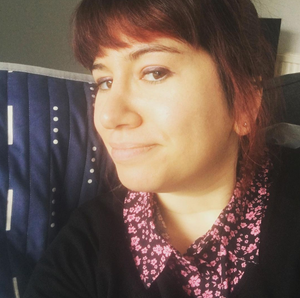
Leif Kendall is a Freelance Copywriter and Director at ProCopywriters; an alliance of 875+ copywriters, communicators, and content specialists.

Leif Kendall
Q. What does a typical work day look like for you?
A typical day is spent in my shed – unless I retreat to a local café for a change of scene. In terms of work, it’s probably 80% client work and 20% developing ProCopywriters. We now have an amazing team in place, so I’m free to focus on my copywriting work and think about the next stages in our development as an association.
My client work is very regular, as 90% of my time is booked by retained clients. This work involves a mixture of corporate communications, content marketing, social media management and straight copywriting for websites.
I love this set-up because I know what I’m doing every month, and I also get to know my clients. And because we work together month after month, I can make sure the words I write do the job I intended.
Q. What is it about ‘content’ that keeps you interested in it as a career?
Variety. And the satisfaction that comes from bridging the gap between my clients and their prospects.
As a copywriter, you get to look at business problems from the outside, where you have more clarity. You can then help businesses overcome their challenges and reach more people.
Clients often say things like, “I feel as though you’ve crawled into my head” or, “you’ve written the things I’ve been trying to say for months” — and that’s immensely satisfying.
That, and I get to work in a shed in my garden, and I never have to ask the boss for permission to do the school run.
Q. What prompted you to get involved with ProCopywriters?
Tom Albrighton and Ben Locker set up ProCopywriters in 2012, I think. Though it was called The Professional Copywriters’ Network. Eventually, Tom decided he wanted to step back, and was set to close it. I’d gradually got more involved after joining, and really didn’t want to see it close.
When I started copywriting in 2008, I was surprised by how few resources there were for copywriters like me: a freelance digital copywriter. I found stuff about advertising, but I’ve probably written two ads in a decade of freelancing, so that’s not me. And I found lots of American resources that were spammy and seemed to rely on trying to sell you information you can find in books and blogs for £199.
I was working with web designers and developers, and they have trillions of amazing resources. I was jealous of their high-quality, authentic resources that were genuinely focused on learning and development.
So I loved ProCopywriters because it was a hub for writers like me; a place to find other writers, hear from my peers and look for guidance.
Copywriters need more resources – not fewer. So I offered to take it over.
Q. What motivated you to introduce The Copywriter Code? And how has the community responded so far?
The response to the Copywriter Code has been largely positive. Obviously, there are loads of conversations to be had about what we include and how we phrase each stipulation, but the majority of copywriters are supportive.
A few people have expressed concerns that we're trying to control people, or penalise people for how they operate… but that's not the case. Our goal is to improve the image of copywriting as a profession, while giving copywriters a framework of positive behaviours.
The Copywriter Code is really just one piece of a greater project of professionalisation. That will include creating other documents and standards, including a code of practice (how we operate), a job description (what we do), and a competency framework (what we know).
This project has been an ambition of the ProCopywriters team for a long time; primarily because our profession is completely unstructured and ungoverned. This leads to problems for copywriters and clients/employers alike.
“…anyone can call themselves a copywriter, without any training or professional experience — and many people do. Without a defined standard of what copywriting is, it’s difficult to sift the talented professionals from the unskilled grifters.”
The emergence of generative AI added impetus to the project because now clients and employers don't know if a skilled human is involved in the creation of their content or if it's just a teenager with ChatGPT. Of course, this also means that genuine copywriters have to compete with AI-equipped chancers. It's bad news for everyone, except the fraudsters.
Q. How should copywriters approach 'transparency' regarding how they utilise AI?
It's an interesting topic and something we're all figuring out.
“The Copywriter Code will recommend that copywriters declare their use of AI tools, if and when those tools are used to generate words that appear in the finished product.”
There is some nuance to this conversation, because we have to acknowledge that, even if a copywriter is using AI as a collaborator, the copywriter is still using their skills, expertise and knowledge to make strategic and tactical decisions that support the client's goals.
But the need for clarity is obvious. Without certainty, clients will wonder if they're paying human writers but receiving AI writing – and that's a type of fraud that can only undermine our entire profession.
Q. How has the CopyCon conference evolved over the years? And what are your hopes for it in the future?
One of the biggest challenges for CopyCon is creating something valuable and meaningful that is also affordable. It's pretty much impossible to hire a good-quality venue (with catering), and to pay contributors fairly, and not have to pass those costs onto attendees.
“You can seek sponsorships, but there’s a delicate balance to tread between having an event that is supported by sponsors and an event that exists to support the sponsors.”
In terms of evolution, we're always learning from our events, listening to our community, and trying new approaches to bring our audience more — in every department.
For example, we've added some online sessions to give our delegates a chance to explore topics in-depth, and we've added practical measures to encourage more conversations and connections on the conference day. And we always try to balance the need to give new speakers a chance to shine with the need to include speakers that already have a wealth of wisdom to offer.
Q. What’s your vision for ProCopywriters over the next five years? Are there any new projects, collaborations, or initiatives on the horizon?
Our vision is to create a robust set of professional standards for commercial writers in the UK. This includes the assets I mentioned earlier, as well as an accreditation scheme so that individuals can demonstrate their skills, knowledge and experience with an independently verified credential.
We also want to create better resources for new copywriters joining the profession, as well as tools to support our more experienced peers
Q. What would be your advice for someone just starting their career in copywriting?
Work as hard as you can, and don’t stop trying until your career takes off.
It can be tricky to start a new venture, especially when there are lots of other copywriters out there, but you have to ignore what everyone else is doing, keep your head down, and work your arse off – during work hours. Outside of work, live your life and spend time with people, doing stuff. Don’t be a work bore.
Don’t obsessively check other copywriters’ websites. Look at your own website. And then make it better. Every time you feel pained because someone else is doing better than you, or you think you’re not doing well enough, fast enough, stop looking at them and do something productive.
=====